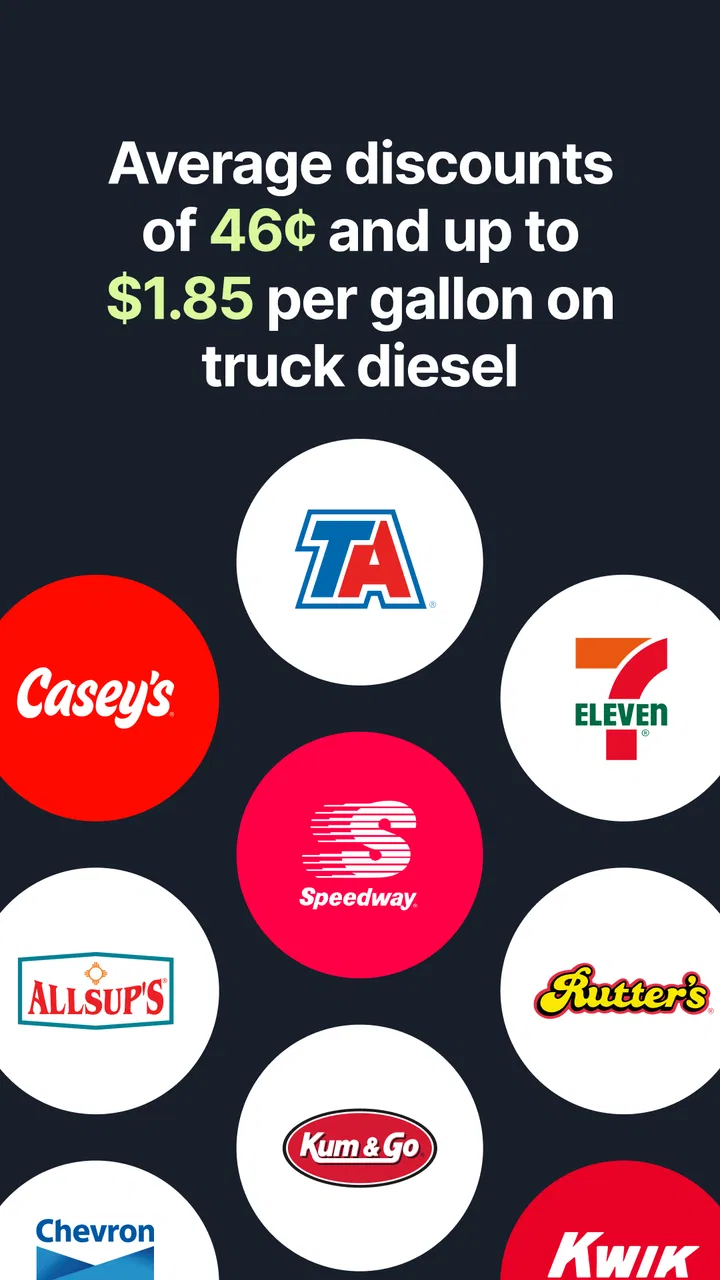
AtoB: Find and Save on Fuel
- 4.6
- Rating
- 10.00K
- Installs
- Free
- Price

 Analysis by App-foxy
I approached AtoB: Find and Save on Fuel as a practical fuel-saving app rather than a general driving companion. That distinction matters. Its focus is the transportation industry and the cost of refuelling, so the value depends less on entertainment or navigation and more on whether it helps you make a better fuel decision during an ordinary working day. The app is free, developed by AtoB, and listed for everyone, which makes it easy to consider without committing money upfront.
My first impression is that this is aimed at people who treat fuel as a business expense, not simply an occasional household purchase. A delivery driver, independent haulier, fleet manager, or small transport operator can look at it with a different question in mind: can this app make routine fuel spending easier to control? That is a more useful way to judge it than expecting a complete route-planning platform.
The app has built a respectable level of visibility on Android, with a 4.6 average from around 600 ratings and more than 10 thousand installs. Those figures suggest that it has found an audience, but they do not remove the need for sensible checking before relying on it for work. Fuel costs are important enough that I would still compare the app’s information with the station’s displayed price and my own route.
You May Also Like

 Blood Strike: 2.5 Anniversary
Blood Strike’s Loadouts Turn Every Drop Into a Tactical Gamble
A close look at Blood Strike’s custom loadouts: how fast access to signature weapons reshapes its battle royale rhythm, rewards preparation, and narrows the gap between fights.

 Pandora - Music & Podcasts
Pandora’s Music Is Easy to Start, but Harder to Recover
Pandora’s strength is its low-effort path from a seed to a station. Its weak spot is how much confidence it asks you to place in connection, setup, and quiet recovery.

 8 Ball Pool
 Is Built on Rivalries, Rematches, and Routine
A close look at the rivalries, rematches, shared routines, and unanswered safety questions that turn a quick pool match into a persistent mobile community.

 Samsung Music
’s Quiet Strength Is Playing What You Already Own
Its reach comes less from spectacle than from dependable access to a personal library. That simplicity is both the app’s strongest retention engine and its ceiling.

 AccuWeather: Weather Radar
AccuWeather Review: A Quick, Clear Forecast for Everyday Decisions
For everyday plans, the best forecast is the one you can understand quickly. AccuWeather makes rain timing, radar, and local conditions easy to act on, with a few trade-offs.

 Hill Climb Racing
Why Hill Climb Racing Still Turns Crashes Into One More Run
A tiny car, a bumpy hill and one more upgrade: Hill Climb Racing keeps resurfacing because its simple chaos makes every near-miss feel personal.
More From Our News Desk



What using AtoB feels like in a real transport routine
I find AtoB most useful when it becomes a small, repeatable step in preparing a trip, rather than an app I open only when the fuel warning appears. In this section, I’ll focus on how that routine can fit around the route and the vehicle’s needs, while keeping the final choice with the driver.
A focused tool instead of an all-purpose driving app
The most important thing to understand is the app’s narrow purpose. AtoB is not presented as a replacement for a full navigation service, a vehicle maintenance log, or a fleet-management suite. Its identity is built around finding savings on fuel. That focus can be a strength because a driver does not have to wade through unrelated travel features when the immediate problem is where to refuel.
In my view, the best use case is a driver who already knows the day’s route but wants to avoid making an expensive, rushed fuel stop. The app can sit alongside navigation rather than compete with it. I would use the navigation app for road instructions, then consult AtoB when planning where a stop makes financial sense. Keeping those jobs separate is less confusing than expecting one application to handle every part of a journey equally well.
For a small operator, the benefit is also about consistency. Fuel decisions made casually can become difficult to review later, especially when several drivers are working different routes. A dedicated fuel-saving tool encourages the team to think about refuelling as a planned choice. That does not automatically guarantee a lower total cost, but it creates a clearer habit than simply stopping at the first familiar station.
A realistic morning with a delivery route
Imagine I am preparing a van for a day with several deliveries. The tank is not empty, but I know the route will include long stretches between stops. Instead of waiting until the warning light appears, I can check the available fuel-saving information before leaving. I would compare the likely detour with the possible saving, then decide whether the cheaper stop is actually worthwhile.
That last comparison is where human judgement remains essential. A fuel stop that saves money at the pump may cost more if it adds unnecessary distance, delays deliveries, or forces a vehicle into a difficult access road. For a heavy vehicle, the trade-off can be even more significant. I would therefore treat AtoB as a decision aid, not as an instruction to chase the lowest visible price at any cost.
A useful routine is to make the fuel decision before the vehicle is moving. I would not want a driver interacting with the app while driving, and I would avoid turning a small saving into a distraction. Planning during a break or before departure makes the tool more practical and keeps safety ahead of convenience.
Where it differs from the usual alternatives
The usual alternative is often a general maps app. Maps are excellent for locating nearby fuel stations and building a route, but they may not be designed around the specific question of fuel discounts for transportation work. AtoB’s appeal is that it starts from that cost-saving problem rather than treating fuel as just another map category.
Another alternative is a fuel-price website or a spreadsheet used by a fleet manager. Those options can be useful for record keeping, but they require more manual work. AtoB is more attractive when I want a quick, mobile-first check instead of maintaining a separate list of stations and prices. On the other hand, a spreadsheet may still be better for long-term analysis, driver reimbursement, or comparing monthly consumption because a focused fuel app is not automatically a full accounting system.
There is also the simple habit of using a preferred station chain. That can be convenient and familiar, especially for drivers who know the facilities and access points along a regular route. AtoB is more valuable when the route changes often or when the operator is willing to consider alternatives. If a driver values predictability above every possible saving, the app may feel less necessary.
Trust starts with visible choices
Because this app relates to transport spending, I would pay attention to trust in practical terms. Before using it for business decisions, I would inspect the permission prompts, account screens, and any settings that explain what information is requested and why. I would also look for clear controls around signing in, signing out, and managing the account. Those are ordinary checks, but they matter more when an app becomes part of a work routine.
I do not treat a strong rating as proof that an app handles every privacy or account question perfectly. A rating mainly tells me that many users found enough value to respond positively. My own standard is whether the app gives understandable choices at moments when it asks for access, personal details, or account information. If a screen is unclear, I would pause rather than accept everything automatically.
The app’s free price lowers the barrier to trying it, but free does not mean I should stop reading the on-screen explanations. I would still review the choices presented during setup and revisit them if the app later changes how I use it. That approach is especially sensible for drivers who use a personal phone for work and want to keep business activity separate from private information.
Account controls deserve attention before a team adopts it
For individual use, the main question is simple: can I understand what I am agreeing to and can I leave the service cleanly if it no longer helps? For a business, the questions become broader. Who creates the account? Can a driver use the app without seeing another driver’s information? What happens when a worker changes vehicles or leaves the company? I would answer those questions by checking the actual account controls in the current app rather than assuming that a consumer-focused tool includes fleet administration.
This is one reason I would test AtoB with a single driver or a limited route before making it part of a larger process. A short trial can reveal whether the sign-in flow is comfortable, whether the available choices are clear, and whether the app fits the company’s existing fuel records. It is better to discover friction during a controlled test than during a busy delivery shift.
I would also avoid sharing one account across several people unless the app clearly supports that arrangement. Shared logins can make responsibility unclear and may expose information to the wrong person. Individual access, where available and appropriate, is usually easier to manage. If the app does not provide the controls a fleet needs, a dedicated fleet platform may be the safer operational choice.
Data-sensitive moments in everyday use
The most sensitive moments are not necessarily the search itself. They can occur during installation, account creation, permission requests, location-related prompts, and any payment or business-information screens. I would read each prompt in context. If a permission seems unrelated to finding fuel savings, I would not grant it casually. If the app explains why access is needed, I would decide whether that reason matches how I plan to use the service.
Location access deserves particular care for drivers. A fuel-finding tool may be more convenient when it can work with a current position, but convenience should not make me forget that location can reveal working patterns. I would choose the least intrusive setting that still supports my intended use, if the operating system and app offer such a choice. I would also review location access later rather than treating the first decision as permanent.
Business users should think about the phone itself. A company device, a personal device, and a shared cab-mounted tablet can have very different privacy implications. I would not assume that installing the app on a shared device creates the same experience as using it privately. Before adding an account, I would check whether the device has other users, saved credentials, or notifications visible to people who do not need to see them.
There is a useful practical rule here: do not enter more information than the task requires. If I only need to investigate fuel-saving options, I would avoid adding unrelated personal or company details until the app clearly explains their purpose. This is not an accusation against AtoB; it is a sensible boundary for any app used in a work setting.
How I would keep control during a trial
I would begin by installing the current release, version 1.70.0, on a compatible Android device. The minimum operating system is Android 7.0, so many older phones may be able to run it, although real-world performance can still depend on the device. After installation, I would note which prompts appear, which settings can be changed, and whether the app remains useful without granting every optional access request.
Then I would use it for a few planned fuel decisions rather than judging it after one glance. I would record the station or option I considered, the distance from my route, the expected saving, and the final choice. This creates a simple comparison between the app’s convenience and the actual needs of my work. It also prevents a visually attractive saving from being mistaken for a genuine reduction in total trip cost.
For a fleet, I would give drivers a short rule: check before moving, compare the detour, and do not treat the app as a substitute for company fuel policy. I would also ask them to report confusing prompts or account problems immediately. That feedback is more useful than simply telling everyone to install the app and hoping the workflow fits.
If I stopped using it, I would remove saved access where possible, sign out on shared devices, and uninstall it only after checking that no important account or fuel information still needs to be retained. These steps are basic, but they give the user a clear exit instead of leaving an unused app connected indefinitely.
Who will get the most from it
I would recommend trying AtoB to independent drivers, small transport companies, and people who refuel frequently enough for modest savings to matter. It is also a reasonable option for someone whose routes vary and who does not want to depend entirely on one station chain. The free price makes experimentation straightforward, and the everyone age rating keeps the audience broad.
The app is less compelling for someone who drives only occasionally, has a short commute, or always uses a fixed station because of a loyalty arrangement. In those cases, the time spent comparing options may outweigh the practical benefit. It is also not the right standalone choice for a company seeking detailed dispatching, vehicle diagnostics, maintenance scheduling, or formal expense management. Those needs call for more specialised software.
I would be cautious about relying on it where a minor route change has major operational consequences. A truck carrying a time-sensitive load, a vehicle with restricted access requirements, or a driver working under a strict schedule may need a known, suitable stop rather than the potentially cheapest one. The best decision is not always the lowest fuel figure; it is the lowest sensible total cost.
Small habits that make the app more useful
- Compare the whole detour, not only the pump price. Include extra distance, traffic, waiting time, and the vehicle’s likely consumption before deciding.
- Plan before the tank becomes critical. A nearly empty tank removes flexibility and can turn a careful price comparison into an urgent stop.
- Separate discovery from navigation. Use AtoB to investigate fuel-saving possibilities, then use the navigation tool you already trust for the actual road instructions.
- Review permissions after the first trip. Once I understand how I use the app, I can decide whether every granted access is still necessary.
- Test it against real receipts. For work use, compare the expected saving with the final fuel cost and the extra distance instead of relying on the headline discount alone.
My cautious verdict after weighing value and control
AtoB: Find and Save on Fuel has a clear reason to exist: it focuses on helping transportation users make more deliberate fuel choices. I like that it can complement, rather than replace, the tools I already use for navigation and records. Its free availability, broad age rating, and support for Android 7.0 or later make it accessible to many drivers, while the current version shows that it remains an actively maintained option to consider.
My recommendation comes with a boundary. I would use it as a planning aid and verify important decisions against the route, the vehicle, and the station’s visible price. I would also inspect permissions and account controls personally, especially before introducing it to a team or installing it on a shared work device. That is the fairest way to evaluate trust: through the choices the app actually shows me, not through assumptions.
My bottom line: this is worth trying if fuel spending is a regular part of your work and you are willing to compare savings with time and distance. It is not a complete transport-management system, and it should not be treated as an automatic answer to every refuelling decision. Used with that realistic expectation, AtoB can turn an easily overlooked daily expense into a more deliberate part of route planning.
FAQs for AtoB: Find and Save on Fuel
01What features does AtoB offer to help save on fuel?
AtoB provides users with a comprehensive map that highlights the best fuel prices in your area, helping you save money. The app also includes a route planner that suggests the most fuel-efficient routes, real-time traffic updates, and a rewards program that earns you points for every gallon purchased. This combination of features ensures that you're always getting the best deal on fuel.
02How accurate are the fuel prices listed in the AtoB app?
The fuel prices in AtoB are updated in real-time, ensuring high accuracy. The app leverages data from multiple sources, including user submissions and gas station feeds, to provide the most current prices. However, occasional discrepancies may occur due to rapid price changes, so it's always a good idea to double-check prices before making a purchase.
03Is AtoB available for both Android and iOS devices?
Yes, AtoB is available for both Android and iOS platforms. You can download the app from the Google Play Store for Android devices and the Apple App Store for iOS devices. The app is designed to offer a seamless user experience across both platforms, ensuring that all features are accessible regardless of your device.
04Does AtoB require a subscription or is it free to use?
AtoB offers a free version that includes essential features like finding the best fuel prices and route planning. However, for users who want access to premium features, such as advanced analytics, exclusive discounts, and ad-free usage, there is a subscription option available. The subscription fee is competitive and offers enhanced value for frequent users.
05How does AtoB ensure user data privacy and security?
AtoB prioritizes user privacy and security by implementing robust encryption protocols and adhering to strict data protection regulations. The app only collects necessary data to enhance user experience and does not share personal information with third parties without consent. Regular security audits and updates ensure that your data remains safe while using the app.
Pros
- User-friendly interface for easy navigation.
- Accurate fuel price comparisons.
- Customizable notifications for deals.
- Supports multiple payment methods.
- Integrates with navigation apps.
Cons
- Limited availability in rural areas.
- Requires constant internet connection.
- Ads can be intrusive at times.
- Some fuel stations not updated regularly.
- Premium features behind paywall.

AtoB: Find and Save on Fuel
Gallery